Plant vision
On vision in plants.
Phototropism
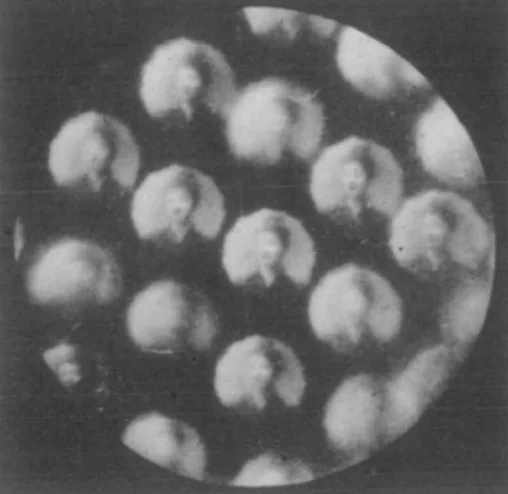
That plants respond to light (phototropism) has long been known. In the early 1900s, it also became known that some plant tissues have structures capable of focusing light precisely. The following is an image formed in the epidermal cells of Tradescantia fluminensis:1
The hypothesis of visually guided mimicry
In 2014, it was discovered that one plant species (Boquila trifoliolata) can mimic the leaf shapes of other plants nearby.2 Plants that mimic background colors or patterns, or the leaves of a single species, were already known, but this was the first species known to mimic a variety of plant species.
Proposed explanations included a response to volatile chemicals from the host plant and horizontal gene transfer from the host. But a 2022 study found that the plant also mimicked the leaves of an artificial plastic plant, rejecting those earlier hypotheses.3 As an alternative, the study proposed that the plant uses ocelli to “see” and mimic the shapes of nearby leaves.