Journal: June 2025
June 2025 journal
Monthly retrospective
Democratic Party candidate Lee Jae-myung was elected president.
Articles I wrote in June:
- Declarative design and design runtime
- Chomsky’s views on LLMs
- Analyzing Liquid Glass
- The Flaws of Meritocracy
- Thoughts on the 21st presidential election
- Personal history of programming
Journal
2025-06-29
I polished the unfinished article Declarative design and design runtime a little.
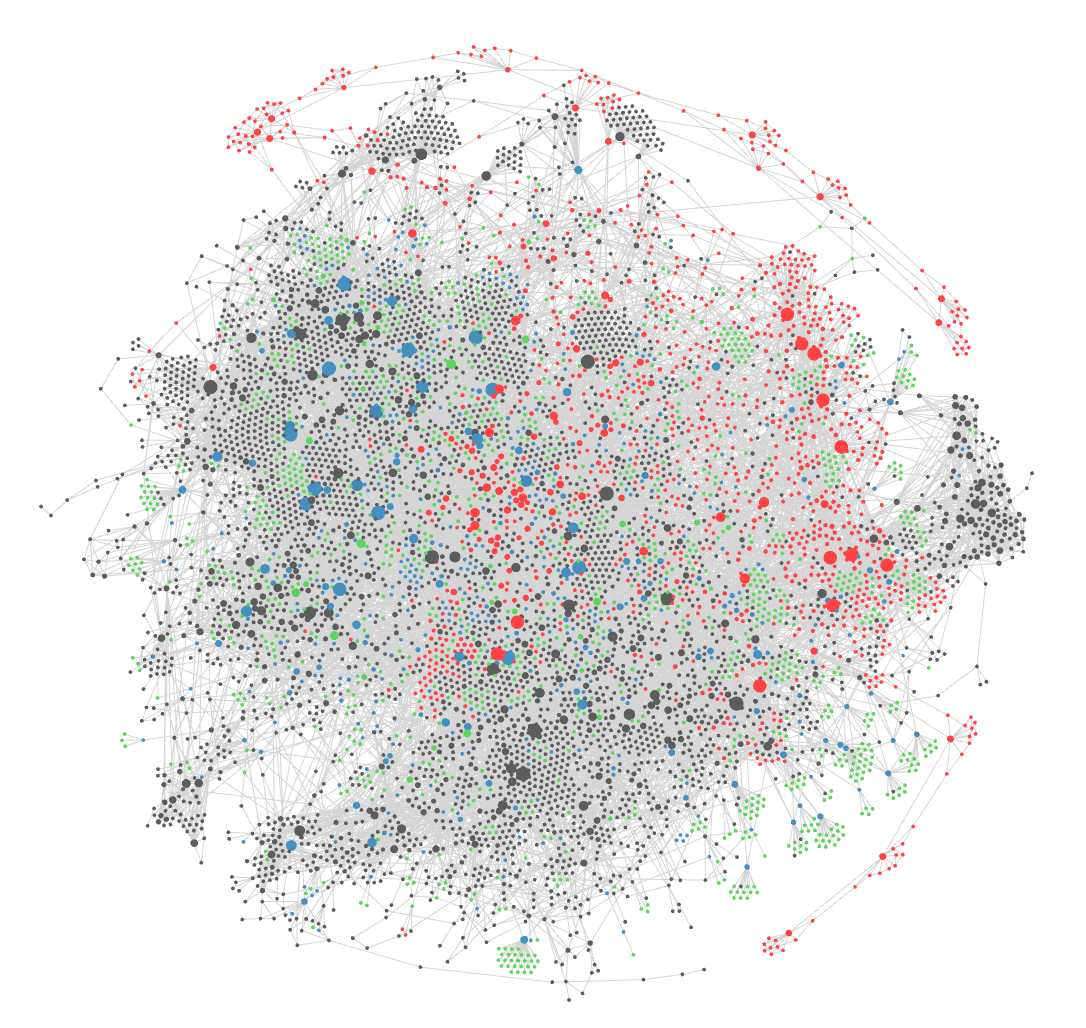
I made a script for wiki gardening. With its help, I found disconnected elements and connected everything. In other words, a path now exists between any two pages. Next, I plan to garden in a way that reduces the average shortest path. (Currently 6,590 nodes, with an average shortest path of about 4.9.)
2025-06-27
I started using Anki to memorize chemical element symbols, Chinese characters, history, and geography.
- Element symbols: Since I am interested in the natural sciences, knowing them should be useful in various ways.
- Chinese characters: I live in a culture that uses Chinese characters, yet know far too few (perhaps 50?). It would be good to know at least the 1,800 characters required in middle and high school.
- History and geography: When reading Russell’s A History of Western Philosophy, I liked how each philosopher’s historical and geographical context was introduced first. Space and time feel like the warp and weft of all learning.
2025-06-26
Kent Beck on the advantages of AI-aided programming:
I make more consequential programming decisions per hour, fewer boring vanilla decisions.
Sid Meier also said, “Games are a series of interesting decisions.” The two seem to have something in common.
2025-06-21
2025-06-16
I added 2024 data to South Korean slaughter statistics. In 2024, humans slaughtered a total of 1,102,071,947 “farmed animals” in South Korea alone. Even now, about 34.9 individuals are dying every second, or about 3,015,360 a day. That is 17,823,494 more than in 2023.
2025-06-10
Apple announced its new design language, Liquid Glass. I installed the developer beta, and it still feels far from polished. Its overly literal rendering of light distortion through convex glass makes it feel very distracting and less usable. Aesthetically, the individual elements are pretty, but together they look rather unimpressive. I do like the larger area available for content.
I looked up related materials and recorded my thoughts: Analyzing Liquid Glass.
2025-06-07
“When a distinguished but elderly scientist states that something is possible, he is almost certainly right. When he states that something is impossible, he is very probably wrong.” —Arthur C. Clarke (original)
This maxim is useful in two directions.
- To be less affected when someone says such a thing to me.
- To avoid carelessly saying such a thing to someone else.
In general, the less familiar I am with a field, the more weight I should give to 1; the more familiar I become, the less weight I should give it. In an unfamiliar field, being too swayed by people saying something cannot be done can discourage me and cost me opportunities to learn. In a familiar field, ignoring such comments too much can turn me into a know-it-all.
While talking with a friend over lunch, I thought about The Flaws of Meritocracy.
2025-06-03
Democratic Party candidate Lee Jae-myung won the 21st presidential election. I wrote down my thoughts on the 21st presidential election.
2025-06-01
Thoughts on the Seol Nan-young–Rhyu Si-min controversy(?).
- A, the spouse of a prominent politician, makes a hateful remark while campaigning in support of the politician.
- B, a prominent intellectual, makes another hateful remark while criticizing A’s remark.
- C, an observer, criticizes B’s hateful remark.
By criticizing B’s hateful remark, has C automatically…
- Defended A’s hateful remark? No.
- Criticized B as a person? No.
- Criticized the politician B supports? No.
If one insists on criticizing C, shouldn’t one first examine whether C has consistently singled out particular people (or groups) in similar situations?
But even if we find that C’s words and actions are consistently biased, that alone is not grounds for criticism. Everyone is biased, and “absence of bias” (so-called neutrality) is not even a worthy ideal except in very particular situations. People differ only in whether they recognize the kinds and extent of their biases, and whether they acknowledge them openly.
So perhaps the viable criticisms are limited to “They are biased but pretend not to be (that is, they are a liar)” or “They are biased but fail to realize it (that is, they are foolish).”